


From quantum physics to precision medicine: connecting superconducting magnetic sensing with biomedical innovation.
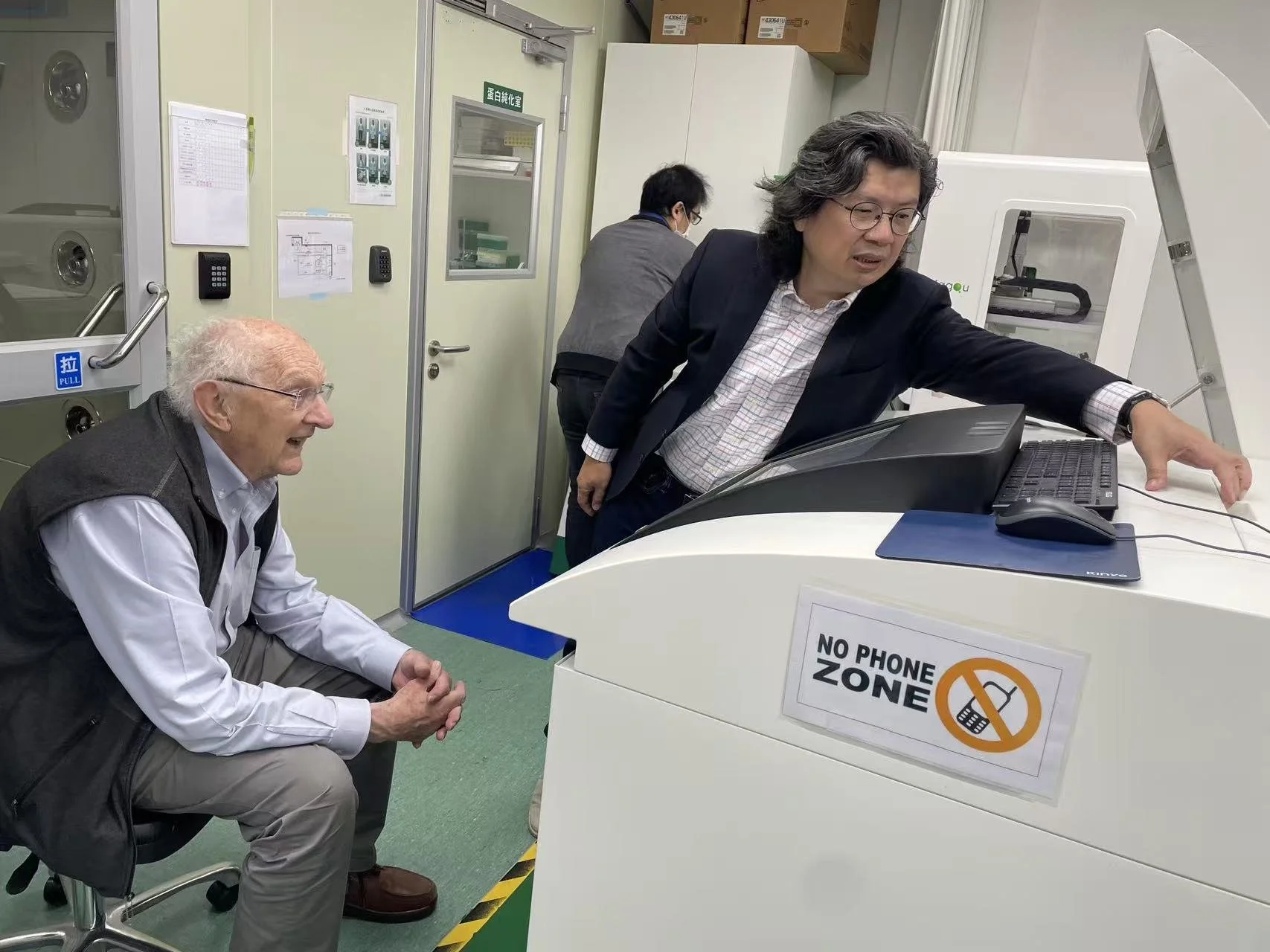
MagQu Co., Ltd. welcomed Professor John Clarke, a co-recipient of the 2025 Nobel Prize in Physics, to its headquarters and laboratory for a visit highlighting the company’s Immunomagnetic Reduction (IMR) technology and ultrasensitive biomarker detection platform.
Dr. Shieh-Yueh Yang, Founder and Chairman of MagQu, led the tour and introduced how advanced magnetic sensing principles are applied to the measurement of low-concentration biological targets.
Connecting Quantum Physics and Magnetic Sensing
Professor Clarke is internationally recognized for his work on superconducting devices and superconducting quantum interference devices, known as SQUIDs. He shared the 2025 Nobel Prize in Physics with Michel H. Devoret and John M. Martinis for their discoveries of macroscopic quantum mechanical tunnelling and energy quantisation in an electric circuit.
SQUIDs provide a concrete connection between superconducting physics and MagQu’s biomarker measurement technology. MagQu’s SQUID-based IMR analyzers use highly sensitive magnetic detection to measure signals associated with interactions between magnetic nanoparticles and target biomolecules.
The visit offered an opportunity to share how magnetic sensing can be translated from fundamental physical principles into practical tools for biomedical measurement.
How Immunomagnetic Reduction Detects Biomarkers
Immunomagnetic Reduction is a magnetic nanoparticle-based immunoassay. Antibodies attached to the nanoparticles bind to target biomolecules in a sample, changing the particles’ response to applied alternating magnetic fields.
By measuring the resulting reduction in magnetic susceptibility, the IMR platform can quantify target biomolecules. This approach brings together antibody-based molecular recognition and sensitive magnetic measurement.
For researchers working with low-concentration blood biomarkers, reliable measurement is an essential step toward investigating biological processes and comparing findings across samples and studies.
Applications in Neurodegenerative Biomarker Research
MagQu develops IMR assays for biomarkers relevant to Alzheimer’s disease and other neurodegenerative conditions. Its portfolio includes amyloid beta, total tau, phosphorylated tau, neurofilament light chain (NfL), and glial fibrillary acidic protein (GFAP).
These targets represent different aspects of neurodegenerative disease research, extending beyond a single protein or measurement. Their interpretation depends on the biomarker, study population, assay performance, and intended application.
MagQu’s ongoing work focuses on developing sensitive measurement tools that support research into these biological changes. The company continues to connect magnetic sensing with biomedical assay development as part of its broader commitment to precision medicine.
About MagQu
MagQu Co., Ltd. develops magnetic sensing technologies, instruments, and reagents for biomarker measurement. Its proprietary Immunomagnetic Reduction (IMR) platform combines magnetic nanoparticles with sensitive detection systems to quantify low-concentration biomolecules.
MagQu’s portfolio includes IMR analyzers and assays supporting research into Alzheimer’s disease, Parkinson’s disease, and other neurological conditions.
Explore MagQu’s IMR technology, magnetic immunoassay analyzers, and biomarker assay portfolio to learn more.